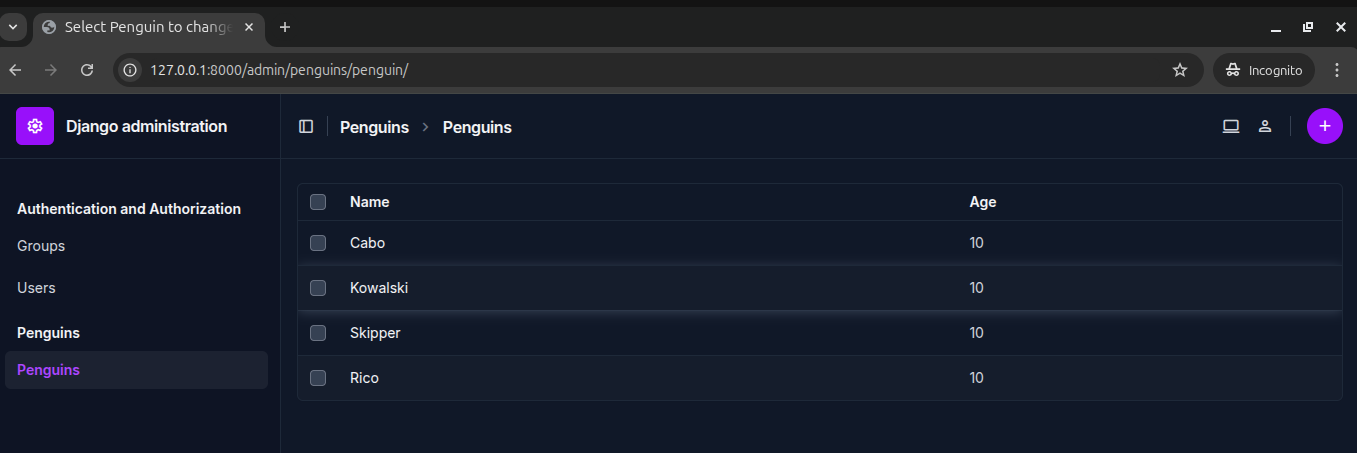
Deploying Django on Vercel with Vite, Tailwind and Django-Unfold





Deploying a Django app can be as easy as Next.js in Vercel. Based on the official Django template, I created a template that includes tools we use daily.
The project includes:
- Django-Vite: To handle static files with Vite and Tailwind CSS
- Django-Unfold: A modern and powerful admin panel
- Whitenoise: To serve static files in production
Vercel config File
Create this file in the root of your project:
vercel.json
{
  "version": 2,
  "builds": [
    {
      "src": "pets/wsgi.py",
      "use": "@vercel/python"
    },
    {
      "src": "build.sh",
      "use": "@vercel/static-build",
      "config": {
        "distDir": "staticfiles"
      }
    }
  ],
  "routes": [
    {
      "src": "/(.*)",
      "dest": "pets/wsgi.py"
    }
  ]
}
This file defines two builds: one for the Django WSGI application and another to process static files through a custom script.
What does each section do?
- builds: Defines two build processes
- The first one configures the Django WSGI application using Vercel’s Python runtime
- The second one executes a custom bash script to compile assets and prepare the application
- routes: Redirects all requests to the Django WSGI application
- distDir: Specifies that compiled static files are located in
staticfiles/
Build Script
This script automates the entire build process on Vercel:
build.sh
#!/bin/bash
set -e

echo "===================="
echo "STARTING BUILD PROCESS"
echo "===================="

echo "Step 1: Installing Python dependencies"
uv sync

echo "Step 2: Installing Node.js dependencies"
npm install

echo "Step 3: Building static files (npm run build)"
npm run build

echo "Step 4: Collecting static files"
uv run manage.py collectstatic --noinput --clear

echo "Step 5: Applying database migrations"
uv run manage.py migrate

echo "===================="
echo "✅ BUILD PROCESS COMPLETED SUCCESSFULLY"
echo "===================="
Deployment
Follow these steps to deploy your project:
- Push your project to GitHub
- Create a new project on Vercel
- Select your repository
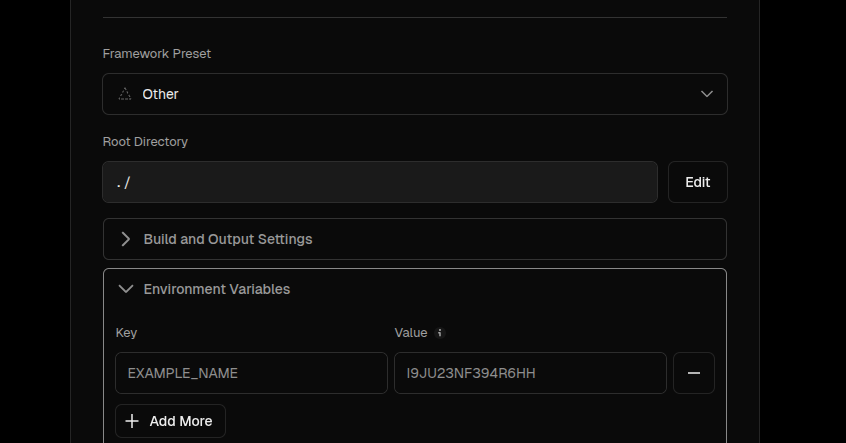
- Select “Other” in framework preset
- Add the necessary environment variables (check .env.example)
- Deploy
Demo and source code
Check out the complete template on GitHub: django-starter